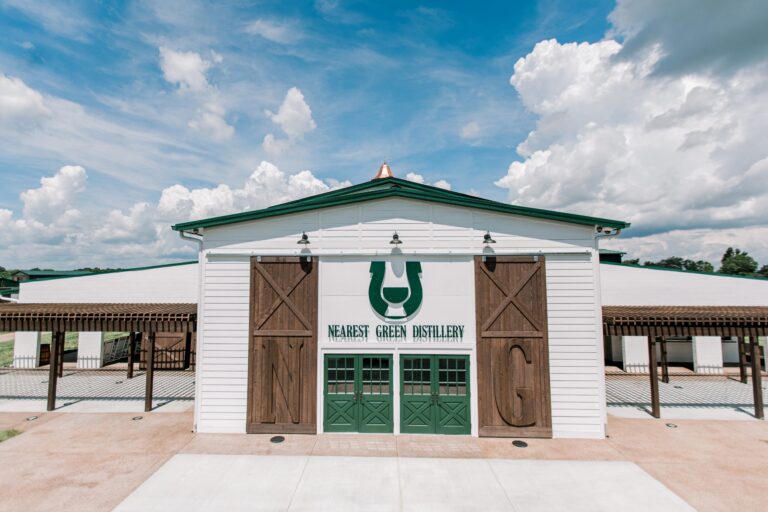
Federal Court broadens Nearest Green receivership

A federal judge has broadened the receivership scope in the Nearest Green case, ordering that Grant Sidney also be put under the receivership umbrella.

“The Receiver is DIRECTED to promptly investigate whether and to what extent Grant Sidney, Inc. holds any assets that rightly belong to Uncle Nearest, Inc., Nearest Green Distillery Inc.,” Judge Charles E. Atchley Jr., directed in his recent order, noting the receiver is to report back to him within 90 days to determine if Grant Sidney will remain under receivership along with Nearest Green.

Grant Sidney, Inc. is a California corporation whose sole shareholder is Fawn Weaver. It is a holding company that owns, among other things, approximately 30% of the outstanding shares of Uncle Nearest, Inc.

“This makes Grant Sidney Uncle Nearest, Inc.’s largest shareholder,” the judge wrote  “Importantly, Grant Sidney was also used by Fawn Weaver and Uncle Nearest as part of their scheme to hide and misrepresent the source of the $20 million Uncle Nearest received from MPTenn, Considering the role Grant Sidney played in Fawn Weaver and Uncle Nearest’s efforts to move the MP-Tenn funds beyond Farm Credit’s reach and obscure their source, see id., it is apparent the receivership must be expanded to include Grant Sidney.”

The inclusion of Grant Sidney into receivership is the latest in the long saga of receivership for Nearest Green – in a case that is approaching the one-year mark. Nearest was first hauled into federal court when its biggest creditor, Farm Credit, claimed they had fallen behind on their payments and were around $100 million in arears. The federal court put the Shelbyville-based distiller under receivership where they remain today, much to the chagrin of co-owner Fawn Weaver who has argued they need to be released from receivership and that continued receivership is hurting the brand. The Weavers tried to file bankruptcy in recent months but that move was blocked by the federal court with the judge maintaining that Nearest is better off staying in receivership.

“In short, the receivership has given Uncle Nearest breathing room to get back on its feet, and the Receiver has taken full advantage of this opportunity. He has improved Uncle Nearest’s operations, increased its profitability (though he still has some work to do this regard), corrected its records, and generally set the company on a better path. Sales may be down, but this cannot be attributed solely to the receivership,” the judge wrote. “And any sales the Receiver may have cost Uncle Nearest are more than offset by the substantial progress he has made elsewhere. Accordingly, this factor weighs strongly in favor of the continuation of the receivership.”

The receiver was hoping to get even more of what he believes to be connected brands under receivership (such as Humble Baron and Barrel House BBQ) but the court refused to include any more at this time. However, the court did overrule the Weavers’ request to be released from receivership.

“The Weavers and Grant Sidney ask the Court to end the receivership. But the record shows the receivership is still necessary to protect Farm Credit’s interests as this litigation plays out,” the judge wrote.

The judge said he weighed the value against what is owed by Nearest Green and found them to be insolvent.

“This results in an estimated enterprise value of $50 million to $125 million,” he wrote. “Considering that Uncle Nearest’s total liabilities amount to roughly $208 million, the Court finds that Uncle Nearest is balance sheet insolvent under the enterprise value approach.”

While Grant Sidney is now under the receivership umbrella, the judge warned the receiver from selling or transferring any part of the business.