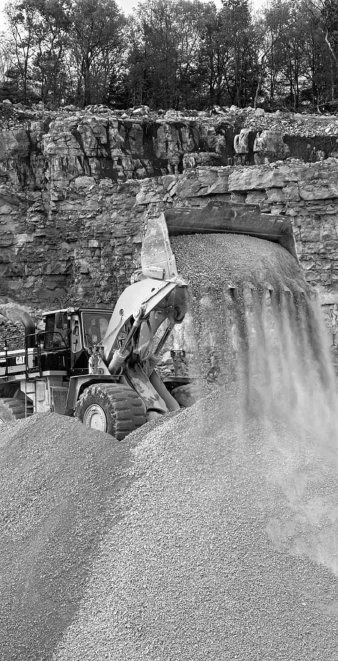
Quarry proposal goes to Metro Council

The Planning and Zoning Commission considered a preliminary site plan from Scott Fruehauf to re-open the rock quarry on Highway 50. Fruehauf owns Lynchburg Stone, LLC, and plans to operate the quarry on a small scale to serve local needs. He estimates producing 20,000 tons of gravel annually, providing extra tax revenue for the county, savings for customers, as well as four or more new jobs.
Fruehauf detailed steps that would be taken to ensure safe operations. Blasting will be done by a third party, and monitored by an independent firm. While pointing out that blasting methods and regulations have improved over the last forty years, Fruehauf stated that there will be seismograph equipment on site for monitoring. He offered to provide the same equipment to any of the neighboring properties if the owners want to monitor blasting effects on their land. He assured the board and attendees that he is insured and bonded, and that any damage done by blasting would be rectified.
The property faces a state highway, so there would be no truck traffic on county roads. All trucks involved in hauling will be DOT certified and insured. The entrance will be widened, and trees near the road will be taken down to provide a clear line of sight for traffic. If needed, acceleration and deceleration lanes will be added to improve traffic safety.
Aurelia Swann, whose property is directly across the road from the quarry, expressed her concerns about damage to the property from blasting. She recalled that in the 60s, 70s, and 80s, when her grandfather owned the farm, three sinkholes opened up as a result of blasting. Damage to the foundation of her house is another of her concerns.
Bedford County Planning Commission Director Chris White warned the board of long term environmental damages that could come from reopening the quarry. His wife owns the Buckeye Loop Road quarry in Bedford County. White pointed out that the water that has accumulated in the quarry since it was last active can affect nearby groundwater, wells, and springs, as well as causing sinkholes and soil loss.
White also told the board that the Rogers Group, who owns over fifty quarries in Tennessee, plans to move into Moore County when their quarry in Lincoln County plays out. Unlike Fruehauf’s plan, a Rogers Group quarry would be a large scale operation.
The question of zoning was addressed as well. The property is currently zoned A-1, and Fruehauf would like to keep it zoned as such with a zoning exception. Rezoning the property to an industrial level could open the area up to other industries that the county may not want. As taxes are paid according to use, there would be no tax loss for keeping the A-1 zoning. That will later be decided by Metro Council, or the Board of Zoning Appeals.
Commission chair Dexter Golden recommended that Fruehauf consider contacting Tony Grow for input and recommendations regarding environmental concerns. Grow currently oversees the solar farm and the digestor to address Moore County’s environmental concerns. Fruehauf agreed.
The commission voted to pass the preliminary plan to the Metro Council for consideration. If given the green light to proceed, there will still have to be a number of steps taken for the project to come to fruition. A final site plan will have to be completed. Apart from that there are three different state permits needed to operate the quarry. These permits address stormwater, air quality, flood plain issues, and site access, and are regulated and monitored by the state for continued compliance.